Our olive tree gave us a surplus of black, ripe olives this year.
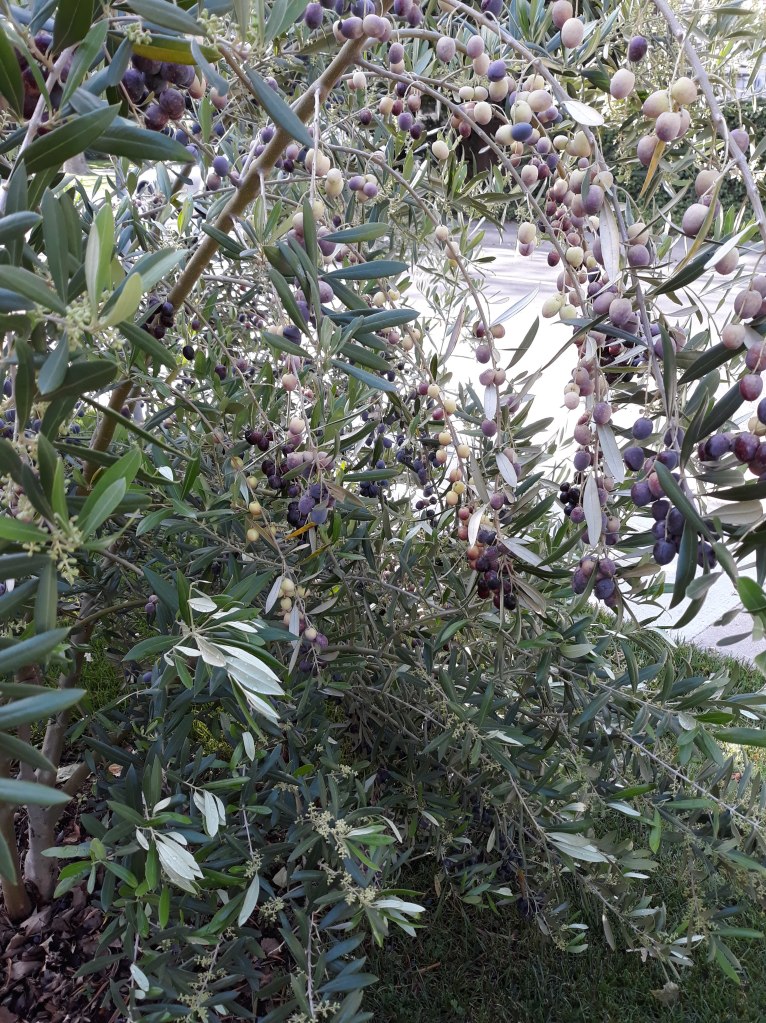
With time on our hands during the coronavirus shutdown, we decided to process the olives. We’d never done this before, so we searched for recipes online and found two to try. This is an account of our adventure and its results (hint: delicious).
First we picked a big bowl of olives from the tree. We rinsed them once with water in a colander.
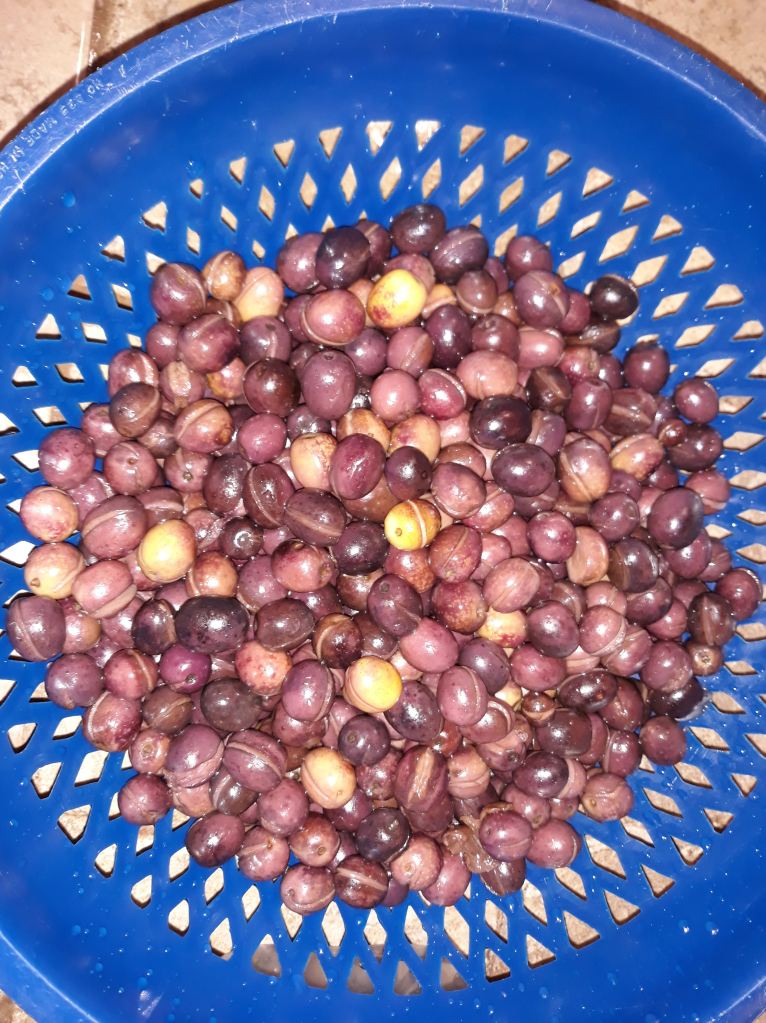
Next, per one of the recipes, I made a slit in each olive with a small sharp knife. Eating raw olives is safe but they are quite bitter. Both recipes involve a preliminary soaking to leach out this bitterness. The slit is supposed to help, but because slitting each olive is tedious work I left a jarful of the fresh olives alone to see if the slit mattered.
Both recipes specify (a) leaching the natural bitterness of the olives and (b) pickling them for an extended time. The recipes only vary in how (a) is accomplished. One recipe said to soak the olives in a salt brine for a week, the other said to soak them in water, changing the water daily, for a week.

I ended up with several sub-batches as experiments. The details are below.
Start with 2 quarts of olives – a bowlful.
Leg 1: brine leach
Leg 1a (¼ of batch): olives not slit (to see if the slit matters)
Leg 1b (¾ of batch): olives slit. Procedure: soak in hot salt brine for 7 days.
==> Result: after 7 days both samples were equally good – the bitterness was gone. Thus, the slit doesn’t appear to be needed. These are ripe, small olives.
Leg 2: freshwater leach All olives slit.
Leg 2a (¼ of batch): soak in recipe 1’s hot salt brine for one day, then use water, changed daily, for 6 days.
==> Result: the olives bloated and lost their color and taste at day 3. After the full 7 days they looked faded, waterlogged and unappetizing. I threw them out.
Leg 2b (¾ of batch): soak in fresh water, changed daily, for 7 days.
==> Result: the olives were red and firm and at 7 days had lost their bitterness. They probably could be done in less than 7 days. The leach can be done with water alone. I concluded that one week of soaking is enough and that the olives need not be split. This is good, because it’s the easiest of the options I tested.
Now, we have olives leached of their bitterness. For all three of the remaining legs the next step was the same:
1. add olives to jars with pickling brine and a layer of oil on top,
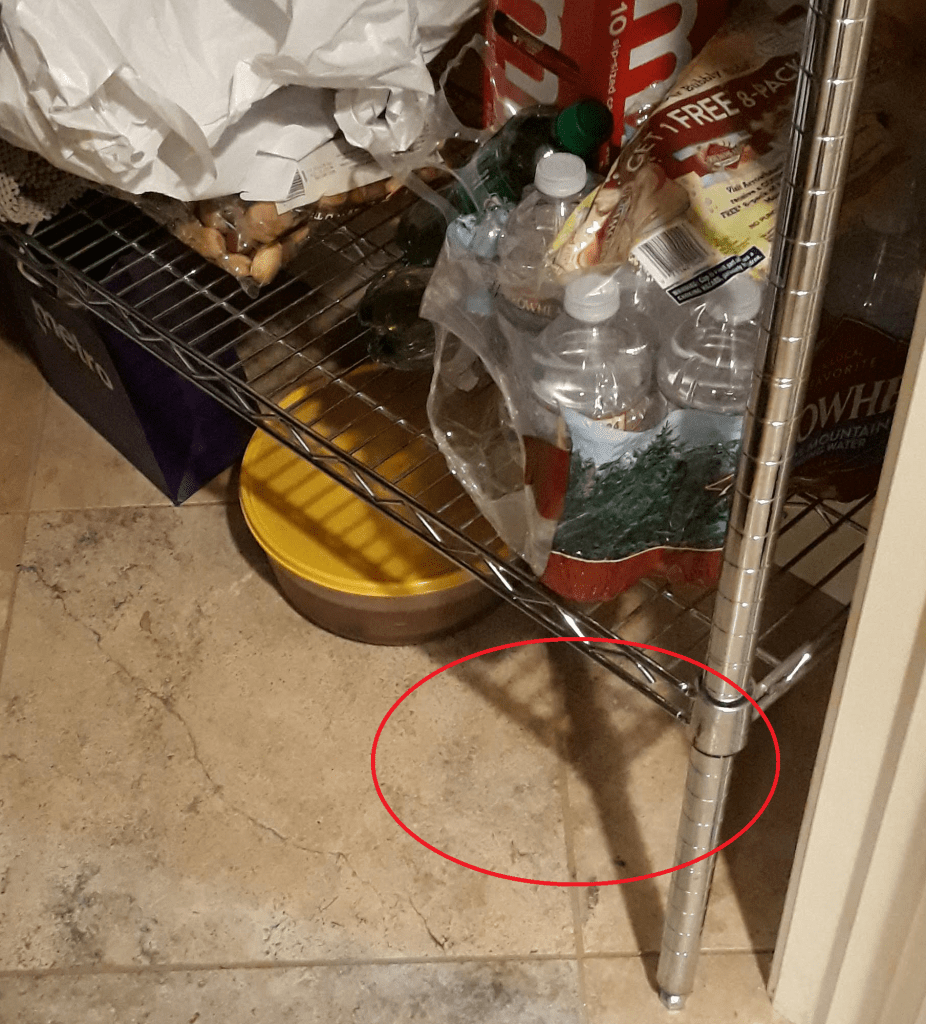
2. store for one month in a 60-80F dark place to ferment. Our pantry floor worked.
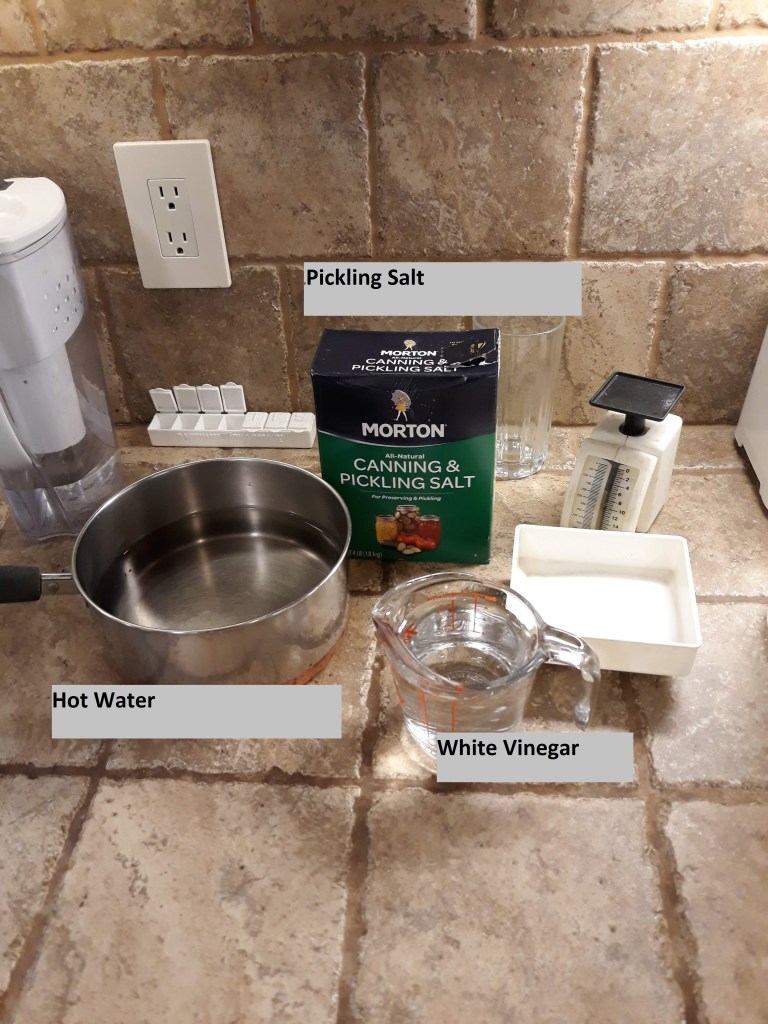
Here are the pickling brine ingredients. Using hot water makes the salt dissolve faster.
Here is the location for our jarred, pickled olives.
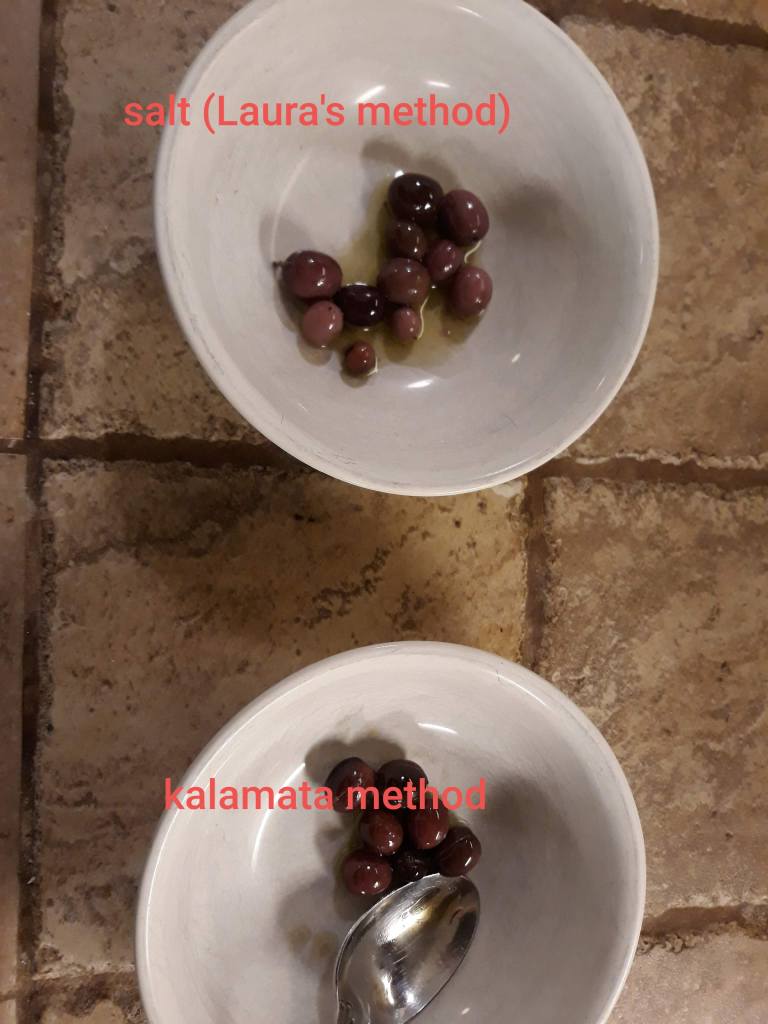
They sat a month and I opened one jar from each leaching method to try the results. The water-only-leached olives were less salty than the salt-brine-leached ones. Otherwise they were equally good. They were as good as any olives I’ve tasted, in fact.
References:
Recipe 1: https://www.wikihow.com/Cure-Olives#Curing-Olives-in-Brine
Recipe 2: https://anrcatalog.ucanr.edu/pdf/8267.pdf (see “Kalamata-Style Olives” section)


Leave a Reply